Exclusive: one out of seven Assistance to Buy homes lose value despite local house prices soaring
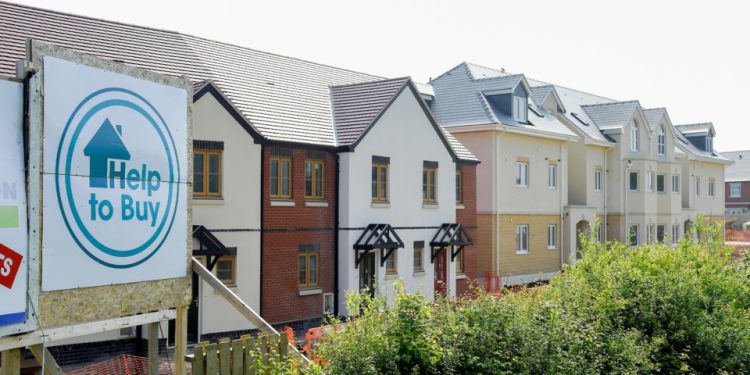
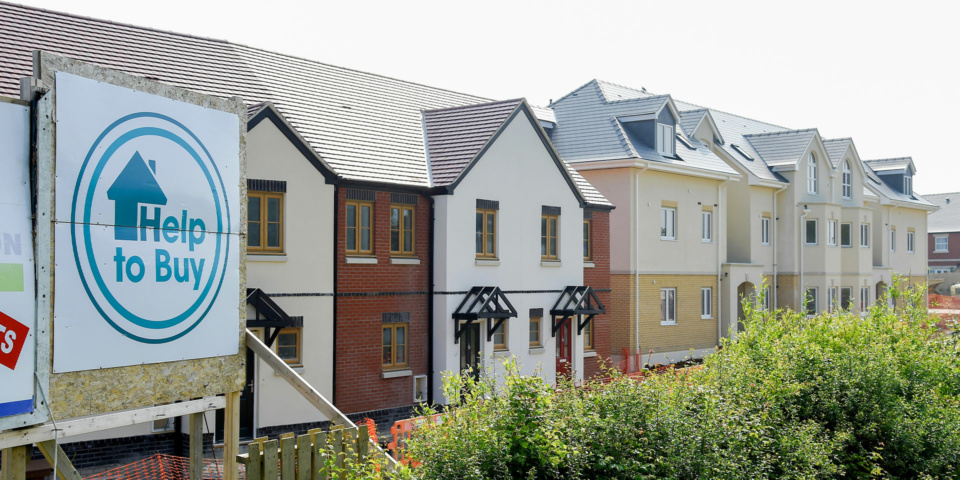
Data exclusively obtained by Which? has revealed that more than 5,000 Assistance to Buy homeowners made a loss on their properties within the scheme’s first six years, despite house prices in their local areas rising significantly.
The Assistance to Buy scheme usually allows buyers to borrow as much as 20% of the new-build property’s value from the government, include a 5% deposit and take out a home loan on the rest. The government loan is repaid like a percentage of the property’s value, rather than a set cash sum.
Out of around 35,000 individuals who had repaid their Assistance to Buy equity loans in England after June last year, one in seven (14%) repaid under they’d borrowed in the first place.
But despite how it may appear, repaying less isn’t a good thing. The idea of Help to Buy is the fact that homeowners build equity through reducing the mortgage and also the property value rising, enabling these to repay the borrowed funds within the first 5 years (after which interest kicks in) and refinance or move to their next home using just their equity and a mortgage.
If the house loses value, the owner pays back less to the government but additionally hold less equity themselves, while still owing exactly the same amount on the mortgage. Within an area in which the surrounding house prices have risen – the case in every area where Assistance to Buy homes have fallen in value – this makes it extremely hard to pay for a brand new home.
There have always been suspicions of the ‘Help to Buy premium’ charged by developers to unwitting buyers. Here, Which? uses never-seen-before Assistance to Buy loan redemption data to explore whether there’s any truth towards the rumours.
Help to purchase equity loan repayment figures kept under wraps – until now
Help to Buy homeowners usually settle their loans when the property is resold, however they can also achieve this when remortgaging by using equity they’ve built up in your home or borrowing more in the mortgage company.
We now realize that over 35,000 individuals have repaid their loans since Assistance to Buy launched in 2021. But when Which? started investigating this, it proved nearly impossible to call any data on how many loans had been redeemed, not to mention whether they’d been repaid at a profit or loss.
In June 2021, we made a Freedom of knowledge request to Homes England. This and our subsequent appeal were both rejected. It was only after creating a complaint to the Information Commissioner, which was upheld, that Homes England finally provided us with the data we’d requested in April 2021.
The figures show that, as much as June 2021, the federal government made a general profit of 11.4% on repaid equity loans, but that 5,002 of the 34,747 loans were repaid at a loss.*
Given that public cash is accustomed to fund the scheme, and loan redemptions are a key indicator of its success, i was surprised it's so challenging to get hold of this information.
*We have removed the very best and bottom 0.5% of redemptions to exclude anomalies.
‘Our Assistance to Buy home lost lb12,000 in value’
Rebecca Tromans (pictured) and her husband bought their first home at Crest Nicholson's Bolnore Village development in Haywards Heath in January 2021. The new-build property cost lb299,950, and they got a 20% equity loan of lb59,950.
Rebecca told Which?: 'We were paying a great deal in rent and really desired to jump on the housing ladder, but my husband was self-employed so mortgage brokers wouldn't take his income into account.
‘We'd never really considered new-build homes once we knew they could be overpriced, but Help to Buy allowed us to obtain a mortgage only using my income.'
The couple might have only afforded a small home on the open market, but Help to Buy allowed them to buy a bigger property. Their plan was to reside in the home for a few years and and then sell up well before interest kicked in on the equity loan.
By 2021, Rebecca’s husband was in full-time employment, meaning the total amount they could borrow on the mortgage had increased significantly.
'We decided to sell in mid-2021, however it took us until early 2021 to locate a buyer as the first sale fell through and then the market slowed down. We wound up selling the home for lb287,500 – a loss of revenue of lb12,450', she says.
Rebecca feels that regardless of the loss, Assistance to Buy would be a good short-term option given her circumstances. However, she believes buyers should consider their long-term plans before using the scheme.
She says: 'We did a lot of research in the beginning and planned how we might get out of Assistance to Buy and buy a home around the normal market, once we didn't want the equity loan and interest payments hanging over our heads in the future.'
Revealed: the largest Help to Buy losses
We checked out all 324 local authorities in England where loans have been repaid, and discovered that although most turned profits, 26 recorded losses.
Worryingly, Land Registry data shows that average house prices increased in every one of these simple areas throughout the same period – and in 21 of the 26, they rose by more than 10%.
This begs the question of why Help to Buy properties fell in value in these areas, and implies that there might be some truth in critics’ suspicions that some developers have applied premiums to homes bought via the scheme.
House hunters using Assistance to Buy don’t have a lot of negotiating power as loans are just on selected properties, demand often outstrips supply, also it can be hard for buyers to know whether the asking price is fair or not – particularly on new developments where comparable properties’ sold prices are hard to come by.
Where have Assistance to Buy loans been repaid baffled?
What’s happened in my town?
Hover over or click an area to determine the profit or loss made on Help to Buy loans, plus how many have been repaid.
How much profit has been made on loans?
Profit matters when reselling a Help to purchase property, as you’ll only have 80% from the proceeds remaining after you’ve paid off your equity loan.
This implies that any house price stagnation or fall in value could leave you not able to progress to an advaced status.
Percentage of Help to Buy properties making profits and losses
The chart above shows that most people who’ve repaid Assistance to Buy loans have made a profit on their homes.
However, the quantity of profit made has fallen over the years.
By April 2021, over fifty percent of equity loans removed within the scheme’s newbie (2021-14) had been repaid, by having an average profit of 17%. By means of comparison, average house prices in England increased by 35% in the same period.
Fast forward 2 yrs to homes bought in 2021-16 and 19% of loans happen to be repaid. The typical profit on repaid loans was 9%, in contrast to an 18% rise in overall house prices.
Average gain year of property purchase
It stands to reason that homes bought earlier would turn the greatest profits because they’ve had longer to improve in price.
When we glance just a little deeper, however, it becomes clear that Help to Buy prices started to soar a couple of years following the scheme’s launch.
First-time buyers and also the Assistance to Buy premium
Help to purchase was launched to boost housebuilding and ‘support a new generation in realising the dream of home ownership’. While it’s technically not limited to first-time buyers, more than 80% of properties sold under the scheme have been first homes.
In its first full twelve months (2021), 22,621 first-time buyers purchased a home using Assistance to Buy. By 2021 that figure had nearly doubled to 42,960.
And because the scheme’s popularity has increased, so too have its price tag.
Between April 2021 and also the end of 2021, the average price paid by first-time buyers in England for any kind of home increased by 39%. The typical amount paid by all buyers of new-build properties also increased by 39%.
But the amount paid by first-time buyers using Assistance to Buy jumped by a much heftier 51%.
Year-on-year price increases for those first-time buyers vs those using Help to Buy
It’s widely accepted that new-build homes are more expensive than existing properties. In the end, they’re completely new, have warranties, and offer the novelty of no one else having lived there.
But even using this into account, the double-digit price increases seen on Help to Buy homes bought from 2021 and 2021 seems excessive in comparison with the general market.
Problems reselling homes on Assistance to Buy developments
The minute you drive a brand-new car off the forecourt it depreciates in value, and the same is true of new-build properties. Unlike with cars, though, the hit adopted a new-build home should lessen over time, as property values across the entire market grow. Most new-build buyers will still ultimately sell in a profit.
But as we’ve shown, this isn’t always the case – particularly with Assistance to Buy, where buyers sometimes seem to pay far above the usual new-build premium.
It’s hard to find resale data for Assistance to Buy properties, as the Land Registry doesn’t list whether a home was originally bought using the scheme. So we checked out developments that heavily promoted Help to Buy (but sold properties within the normal far too) to provide an indication of what might have became of Help to Buy homeowners who’ve tried to sell.
As the charts above show, many Help to Buy properties make decent profits – particularly those from the earliest times of the scheme. But we’ve found multiple types of developments where homeowners have struggled to sell, or been forced to lower their prices to be able to attract a purchaser.
Bridle Wood, Telford
The Bridle Wood rise in Telford and Wrekin was launched in 2021, with just over 1 / 2 of its 79 properties bought using Help to Buy equity loans.
In its promotional material, developer Keepmoat Homes wrote that 'with offers like Assistance to Buy, getting into a great new home could be more affordable than you think'.
Two homeowners at Bridle Wood have since sold their properties, turning losses of 14% and 1%. Another property sat on the market unsold for eight months.
Yet average house prices in the local area increased by 20% between January 2021 and March 2021.
Viridium, Camberley
In 2021, Hodson Developments held a dedicated Assistance to Buy event at its Viridium rise in Camberley, Surrey, to showcase its new phase of homes.
Its ‘Belgravia Collection’ of properties was in love with the same development the previous summer.
Since then, four flats within the Belgravia Collection happen to be resold. Three suffered losses of more than lb20,000, or 8% from the original cost, while one turned a small profit of 1.6%.
A fourth flat was listed in August last year for lb9,000 under the dog owner had paid for it, prior to being reduced with a further lb10,000 in September, as shown on Zoopla:
It’s now sold, although we don’t yet know how much for. Whether or not the seller had achieved their final asking price of lb265,000, though, that would have meant a loss of 6%.
Another four flats are currently for sale, all in the same price their owners originally paid. Three of them were originally on for more, but have since been reduced.
Meanwhile, average property prices in the local authority increased by 8% between August 2021 and March 2021.
The London conundrum
If your Help to Buy property has fallen in value and you’re worried about taking a loss when you sell, you can simply stay put.
But this is often expensive too, as interest payments kick in on Help to Buy equity loans after 5 years. Rates start at 1.75%, and rise through the degree of the Retail Prices Index (RPI) plus 1% every year next.
It may not sound too bad, but consider Assistance to Buy homeowners in London, where rather than the standard 20% you can borrow as much as 40% from the property value in the government. Three quarters (77%) have opted to do this.
In a sluggish property market with little if any growth in house prices, homeowners face significant struggles to repay these loans before interest kicks in.
Our calculations show that in year six, buyers who’ve taken out the utmost loan of lb240,000 face paying lb4,200 in interest along with their mortgage and, if they’re in a flat, service charges and ground rent.
Help for house builders
Help to Buy has long faced allegations of lining the pockets of builders in the expense of buyers.
In September, Oliver Shah of The Times wrote that ‘rarely has an industry grown more addicted to the heroin of public cash than builders with Help to Buy’.
The National Audit Office says the entire combined housing sales of five of the six largest developers in England – Barratt, Bellway, Persimmon, Redrow and Taylor Wimpey – have raised by more than half since Help to Buy was launched.
Overall, between 36% and 48% of these developers’ new homes were sold via Assistance to Buy in 2021.
Their stock price increases have significantly outstripped the ones from the FTSE 250 because the scheme’s launch.
The way forward for Help to Buy
Criticisms of Help to Buy haven’t fallen on deaf ears. From next April (though possibly later because of coronavirus) the scheme are only open to first-time buyers, and regional price caps is going to be brought in.
These caps were set at 1.5 times the typical first-time buyer price per region in Autumn 2021.
Critics have pointed out that these prices is going to be at least two-and-a-half years out of date at that time. With average values having risen meanwhile, developers may be put off building Assistance to Buy properties as it simply won’t be worth their while.
And therein lies the problem: as Help to Buy is limited to new-build properties, it needs developers’ buy-in to operate.
Major house builders are only interested whether they can make a decent profit, however this comes in the expense of the buyers the scheme is supposed to help, and also the government itself.
Has Assistance to Buy been a success?
By no more 2021, 214,000 first-time buyers had bought a home in England using Assistance to Buy. On that basis, the scheme has undoubtedly achieved its aims of boosting house-building and homeownership.
It has helped lots of people who'd otherwise have struggled to get a mortgage to buy their own home, and may be described as a great option – provided that buyers possess a arrange for repaying the loan which properties cost right in the to begin with.
However, the extra borrowing power granted by Help to Buy equity loans has allowed ever-increasing price points rather than forcing developers to build homes that are affordable to begin with.
Couple this with the Public Accounts Committee’s finding that the federal government (and taxpayer) may make a little loss on repaid loans once inflation has been factored in, and it is reasonable to reason that house builders have benefited probably the most.
By the time the assistance to Buy equity loans scheme is closed in 2023, the government forecasts it’ll have loaned lb29bn to finance 462,000 purchases.
Many buyers may have reaped the rewards. But others may find that while the scheme helped them onto the property ladder, it left them stuck on the bottom rung.
Which? advice for first-time buyers
The Help to Buy scheme is just one of the options available to people looking to buy their first home.
Shared ownership schemes allow you to purchase a be part of a new-build flat and pay rent around the remainder. Shared ownership is popular in London, but the combined costs of your mortgage and rent can add up.
It’s also worth seeing whether you can get a 90% or 95% mortgage with an existing property instead.
Rates on low-deposit deals were very low before the coronavirus outbreak, and although many mortgages were withdrawn following the lockdown started, we're able to see them reappear within the coming weeks and months. Find out more within our guides on finding the best mortgage and applying for a home loan.
Or if purchasing a house is much more of a long-term goal, there’s plenty of advice within our guides on saving for a mortgage deposit, including details of how a lifetime Isa can help you bag a 25% bonus in your savings.


